+27 79 619 8228
Johannesburg Work shop
Unit SC027
Moddercrest Office Park
1 High Street
Modderfontein
Johannesburg
Cape Town Showroom
43 Wolfe Street
Chelsea Village
Wynberg
Cape Town
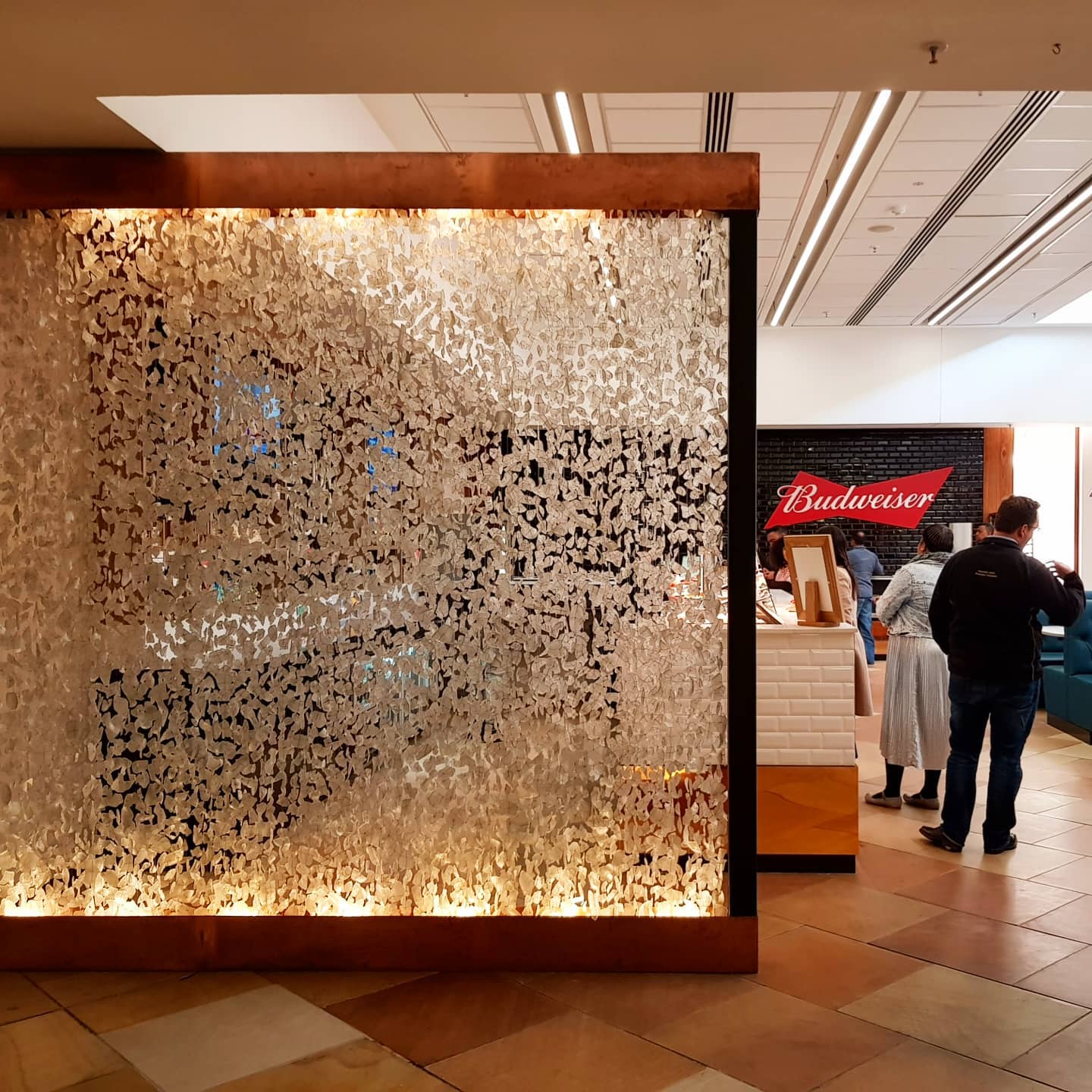
For most of the last century, lighting sat near the bottom of the design pecking order. You picked the art, the furniture, the finishes, and then you found something reasonable to light it all with. That order is quietly reversing.
Open-plan living is a big part of why. Fewer walls means fewer places to hang a painting, and the space that's left, the ceiling, the void above a kitchen island, a double-volume stairwell, has become the one surface every room actually has in abundance. Something had to fill it, and increasingly, that something is a fixture designed to be looked at, not just switched on.
Social media pushed the same direction from a different angle. A striking light fixture photographs in a way a tasteful beige sofa never will. Homes built for how they'll be seen, not just how they'll be lived in, tend to invest in the one element that reads instantly in a photo: light, and the shape it's coming from.
There's also a simple materials story behind it. The line between "lighting" and "sculpture" has always been thinner than the industry treated it. A fixture is already an object with form, scale, and presence in a room, the only real difference from a sculpture is that it happens to also produce light. Once designers started treating that seriously, custom and bespoke lighting studios stopped being a niche and started becoming where a lot of the most interesting design work in a home actually happens.
None of this means the fixture has to be loud. Some of the strongest examples are quiet, a single well-scaled piece doing the work an entire gallery wall used to. What's changed isn't necessarily volume, it's intention. Lighting chosen last, to fill a gap, looks like an afterthought. Lighting chosen first, as the thing the room is actually built around, looks like art.