
+27 79 619 8228
Johannesburg Work shop
Unit SC027
Moddercrest Office Park
1 High Street
Modderfontein
Johannesburg
Cape Town Showroom
43 Wolfe Street
Chelsea Village
Wynberg
Cape Town
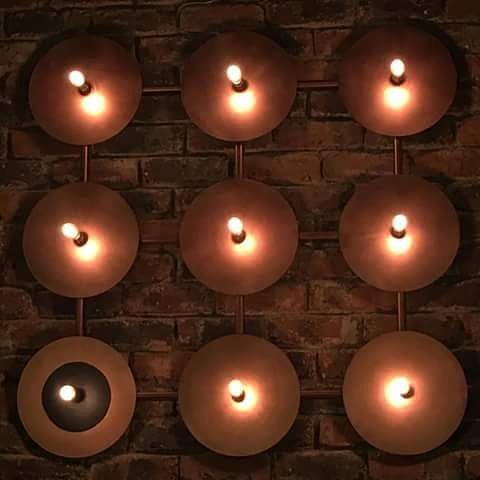
Most homeowners think about lighting last, after the furniture's chosen, the paint's on the walls, the layout's settled. We'd argue it should come first. Light changes how big a room feels, what mood an evening has, whether a ceiling reads as high or low. Get it right and everything else in the space looks better for it.
Here are seven things we come back to on almost every project, whether it's one reading nook or a full architectural build.
A single central pendant lighting an entire room is the most common mistake we see. Real rooms need three layers: ambient light (the general glow that fills the space), task light (focused light for reading, cooking, working) and accent light (light that draws the eye to something specific, art, texture, a favourite chair). One overhead fixture on its own reads flat. Layer it properly and the room has depth before you've even hung a picture.
In open-plan spaces, a double-volume living area, a dining room open to the kitchen, resist scattering several small fixtures around. One well-scaled sculptural piece, hung at the right height, does more than five smaller ones fighting for attention. We see this constantly with tiered pendants and halo installations in double-volume spaces: one striking piece, placed deliberately, becomes the thing the whole room organises itself around.
This is the tip people ignore most, and it makes the biggest visible difference of any on this list. A small pendant in a large, high-ceilinged room disappears, it reads as an afterthought rather than a decision. An oversized fixture in a modest room does the opposite, it overwhelms it. Rough guide: measure the room's length and width in feet, add them together, and that number in inches gives you a sensible fixture diameter to aim for. Not a hard rule, but it stops the two most common scale mistakes before they happen.
Colour temperature, measured in Kelvin, affects mood more than most people realise. Warmer light (roughly 2700K to 3000K) suits living rooms, bedrooms and dining areas, it's flattering and relaxed, the kind of light that makes people linger. Cooler light (3500K to 4000K) suits kitchens, home offices and workshops, where alertness matters more than atmosphere. Mix the two in one open space without a reason and the room feels subtly off, often without anyone being able to say why.
In open-plan homes, lighting is one of the few tools you have to separate a living area from a dining area from a kitchen, without building a wall. A pendant cluster over an island, a distinct fixture over the dining table, ambient wall-washing in the lounge, each zone gets its own identity and the whole space reads as organised instead of one undifferentiated room.
Lighting is one of the few things a guest will actually stop and ask about. We build our own collections from reclaimed materials, old truck air filters, discarded glass, repurposed cooling fans, partly because a fixture with a real story behind it becomes a conversation rather than just something on the ceiling. It doesn't need to be reuse on that scale. Choosing honestly-sourced materials over generic mass-produced fixtures changes how a room feels, full stop.
Unusual ceiling heights, curved staircases, a double-height atrium with nothing on the market that fits, this is where standard retail lighting simply can't help, no matter how long you search. It's why bespoke studios exist: a piece built for one staircase, one ceiling, one room, solves a problem no catalogue will. Costs more upfront than buying off a shelf. It's also the only route to something that actually fits the space it's going into.
Good lighting doesn't come down to spending more. It comes down to making a deliberate choice at each of these seven points instead of defaulting to whatever the builder installed. Start with layering and scale, those two alone will fix most rooms.